How to reclaim a street
 03.01.26 // Hillcrest // Hillcrest's Pride Promenade moves ahead.
 Nehemiah Buenaventura, Business Manager
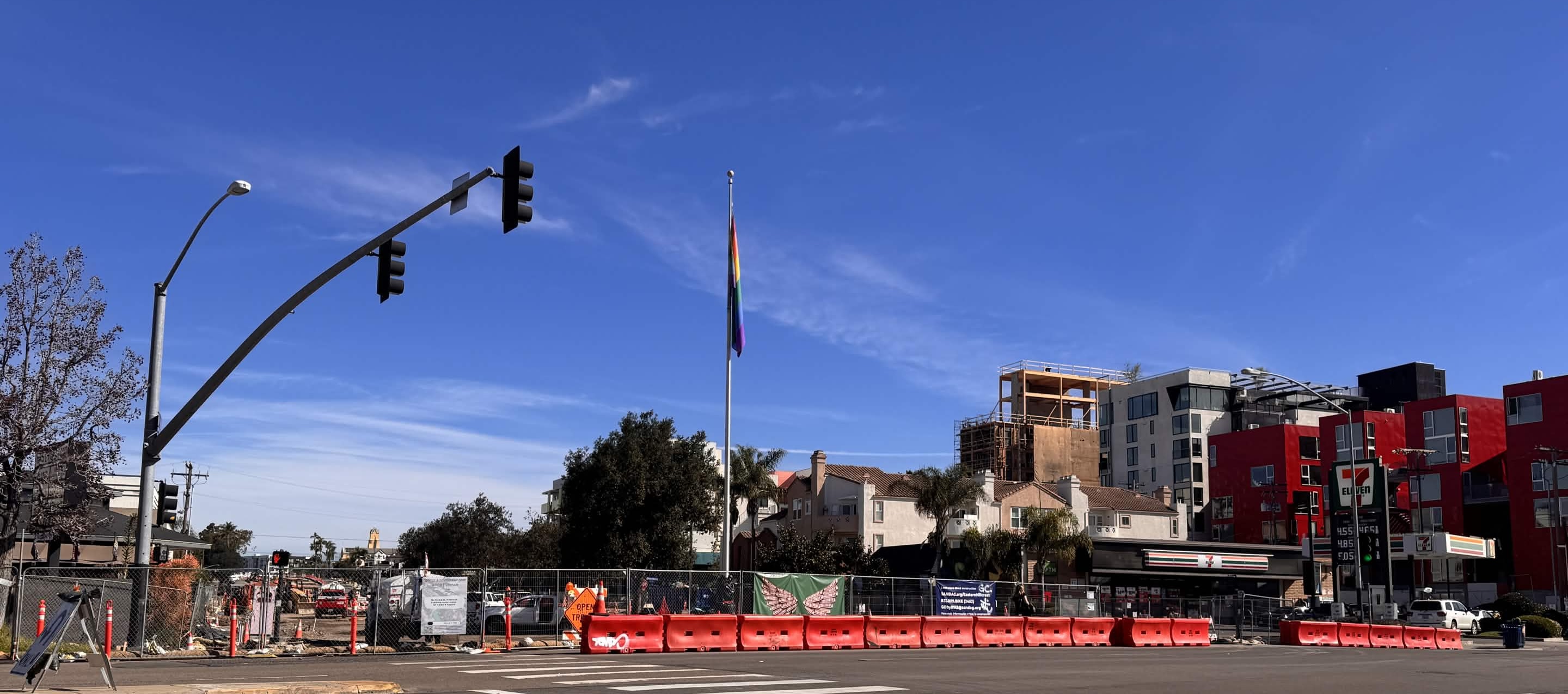
The Normal Street Promenade, referred to by some as the Pride Promenade, is an under-construction public park and pedestrian corridor running through the heart of Hillcrest, a community long recognized as one of San Diego’s most vibrant and culturally significant neighborhoods.
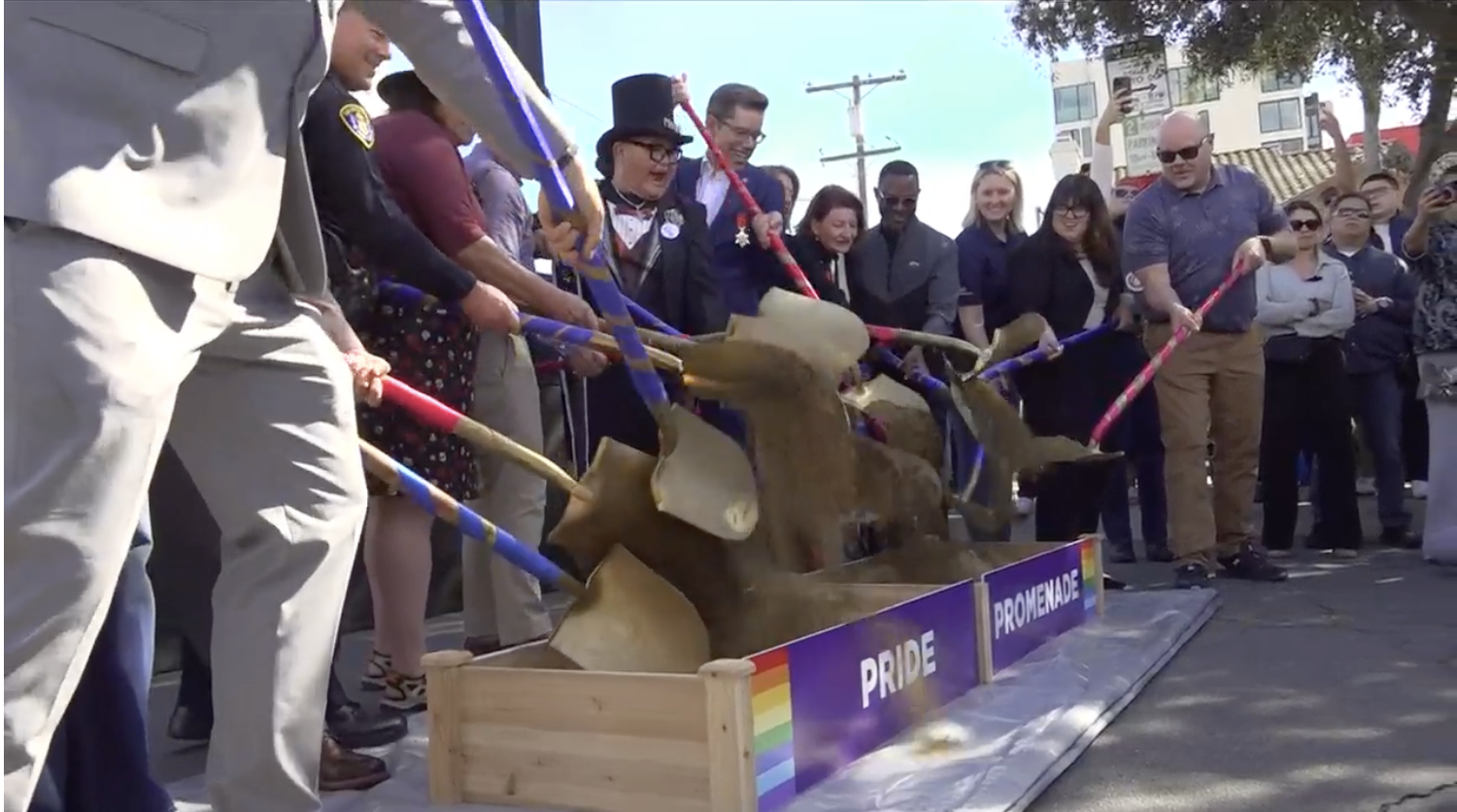
Pride Promenade groundbreaking event. (Hillcrest BIA)
The Normal Street corridor’s unusual width is no coincidence. In the early 20th century, Normal Street was built to carry cable cars, connecting downtown to growing residential areas like Hillcrest. When the streetcar system was dismantled in the mid-1900s, the oversized right-of-way remained, eventually becoming a broad and underutilized stretch of pavement that felt more like left-over infrastructure than a true neighborhood street.
As the streetcars disappeared, Hillcrest continued to transform. By the 1970s, it had emerged as the center of San Diego’s LGBTQ+ culture, activism, and nightlife—a place where community formed not just through housing, but through gathering spaces, protests, celebrations, and everyday street life. Today, the Pride Promenade reclaims this former transit corridor and reshapes it into what aims to be a people-first civic space rooted in that history.
The project will take over the western half of Normal Street between University Avenue and Lincoln Avenue, while the eastern side remains for a single travel lane, parking, and local access. Instead of a single wide road, the street is being reorganized into a linear civic space with widened walkways, landscaped gathering areas, seating, lighting, public art, and design elements that celebrate Hillcrest’s LGBTQ+ history and culture. There will be shaded lawns, places to meet and relax, a playground for younger residents, and a refurbished vintage streetcar repurposed as a café—a direct nod to the corridor’s transportation legacy. Since the installation of a towering Pride flag on Normal Street, the space has naturally become a gathering point for protests, celebrations, and community moments. It has become “a place to celebrate, to protest, to just exist together,” according to Michael Donovan, a longtime Hillcrest resident and member of Uptown Planners. I had a chance to talk to Donovan about the Pride Promenade project and the future of Hillcrest.
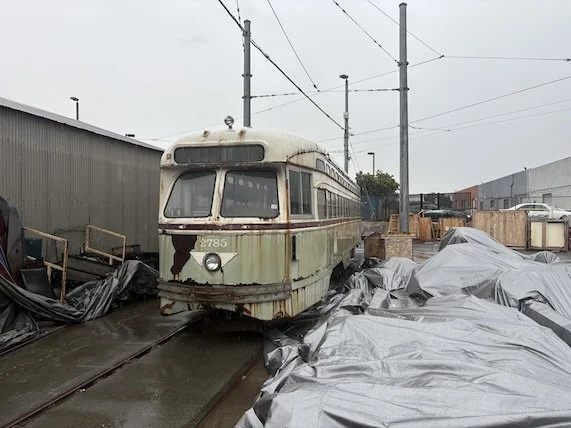
This 1947 ex-SEPTA "PCC"-type streetcar was purchased for Vintage Trolley service but never re-gauged or restored. It is expected to become a centerpiece of the Pride Promenade project. (Hillcrest BIA)
The Pride Promenade is also the centerpiece of a much larger mobility project: the Eastern Hillcrest Bikeways project. Led by SANDAG, the project aims to dramatically improve safety and connectivity for cyclists and pedestrians across the neighborhood. The Promenade itself will feature a rainbow-colored bikeway that stitches directly into this network—linking Hillcrest with surrounding neighborhoods and making biking a more realistic option for commuters. Together, the bikeway and promenade will provide roughly 1.1 miles of separated bike space along:
> University Avenue from 9th Avenue to Normal Street
> Normal Street between University Avenue and Washington Street
> Lincoln Avenue, Herbert Street, Robinson Avenue, and Park Boulevard\
None of this appeared overnight. The Pride Promenade and Eastern Hillcrest Bikeway grew out of years of community outreach–from early efforts like “Reimagine Normal” to formal adoption in the Uptown Community Plan and citywide bike network planning. Portions of the roadway had to be reclaimed through negotiations and eminent domain, closing old driveways and improving safety while keeping traffic flow intact. Residents, businesses, and neighborhood groups helped shape the projects around safety, accessibility, aesthetics, and community use, making it less of a top-down infrastructure project and more of a shared neighborhood transformation. And as new apartment buildings rise along the corridor, the Promenade is already reshaping how the area functions–not replacing University or 5th Avenue, but complementing them and piecing together a network of gathering places tied together by walkability, public art, and people-first design.
With growth, of course comes concern, particularly in a neighborhood long considered the heart of San Diego’s LGBTQ+ community. In our interview, Donovan acknowledged the risk of displacement and cultural erosion. But Hillcrest’s community plan now formally includes an LGBTQ+ Cultural and Entertainment District, along with protections for nightlife and legacy businesses. New residents even sign waivers acknowledging the area’s vibrant, sometimes noisy character. “You’re moving into a neighborhood with bars, restaurants, and celebrations,” says Donovan. “That’s part of the culture.” While the LGBTQ+ community today is no longer confined to a single neighborhood, a sign of broader acceptance, Hillcrest remains its symbolic home. “It’s not the buildings that matter. It’s the people and the history… Uptown is becoming part of San Diego’s urban core,” he says. “The question is: what kind of quality of life are we building?”
When completed in late 2026 or 2027, the combined Pride Promenade and Eastern Hillcrest Bikeway aim to do more than improve transportation. The projects aim to provide a community hub for daily life and major events alike, from the weekly Hillcrest Farmers Market to Pride celebrations, protests, performances, and everyday neighborhood moments. The Promenade has the potential to be a shift in how Hillcrest grows—reclaiming space from cars, honoring history, and creating room for community in the middle of rapid urban change. And a street once built for streetcars is becoming something new again: not just a corridor, but a place.
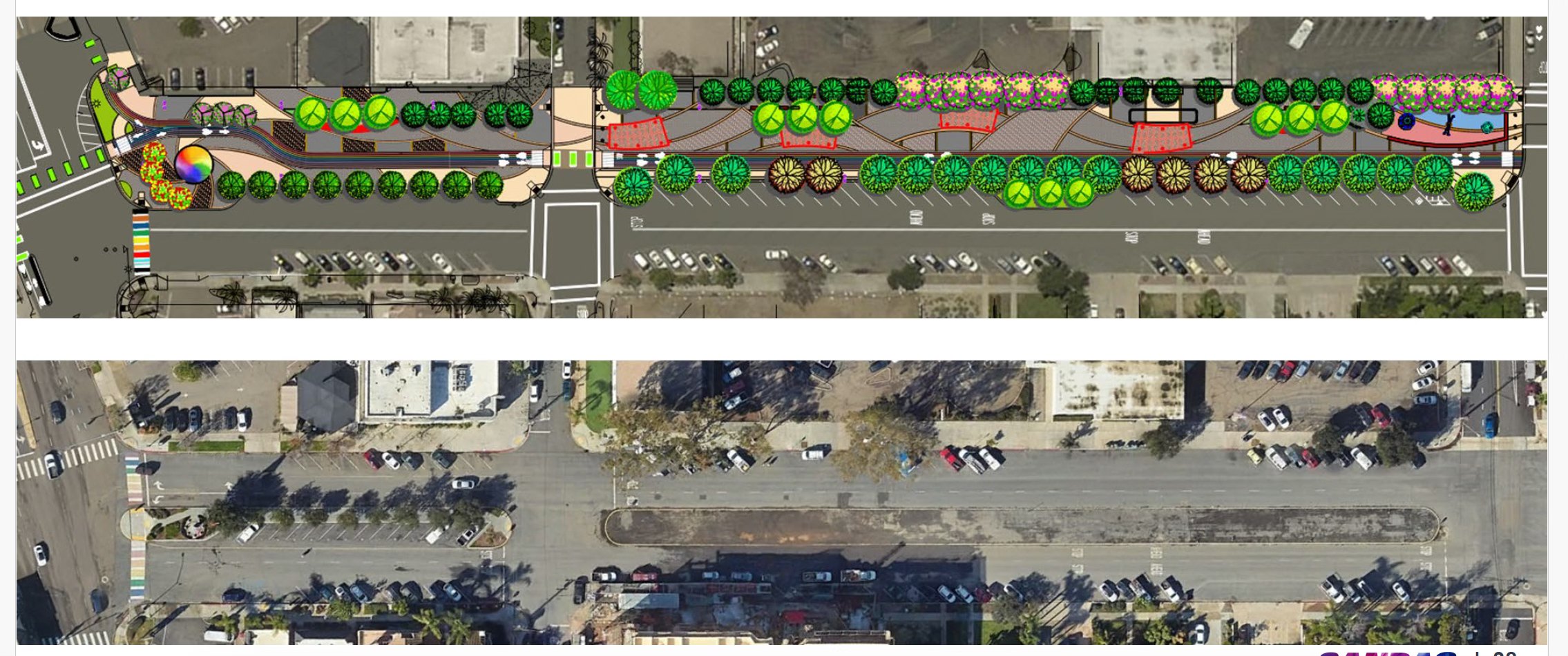
Aerial render of the Pride Promenade project. (Hillcrest BIA)