
'To boldly go where everyone else has before': On 35 years of the ADA
 07.26.25 // How the US set the global standard for accessibility.
 Samuel Sharp, Platform & Journal Lead
On July 26, 1990, the Americans with Disabilities Act, better known as the ADA, was signed into law. While there's still work to be done in making fundamental mobility accessible to all, we've come a long way. As late as the 1970s and 1980s, many transit buses across the nation were flat out inaccessible to those with mobility impairements. Stops weren't announced visually and audibly, and no agency was mandated to provide door-to-door paratransit service to customers who couldn't take advantage of fixed-route transportation.
While the ADA was landmark legislation in many ways, the fight to get there was even longer. In 1978, a wave of protests that would spark the national disability rights movement began in Denver. For years, activists in Denver and across the nation barricaded buses until agency leaders would meet with them about procuring wheelchair-accessible buses. Organizations like ADAPT - American Disabled for Accessible Public Transit - borrowed tactics from the Civil Rights Movement and led dozens of protests, most notably at meetings of the American Public Transportation Association (APTA). Promotional materials from the time radically declared the disabled community's freedom "To Boldly Go Where Everyone Else Has Before."
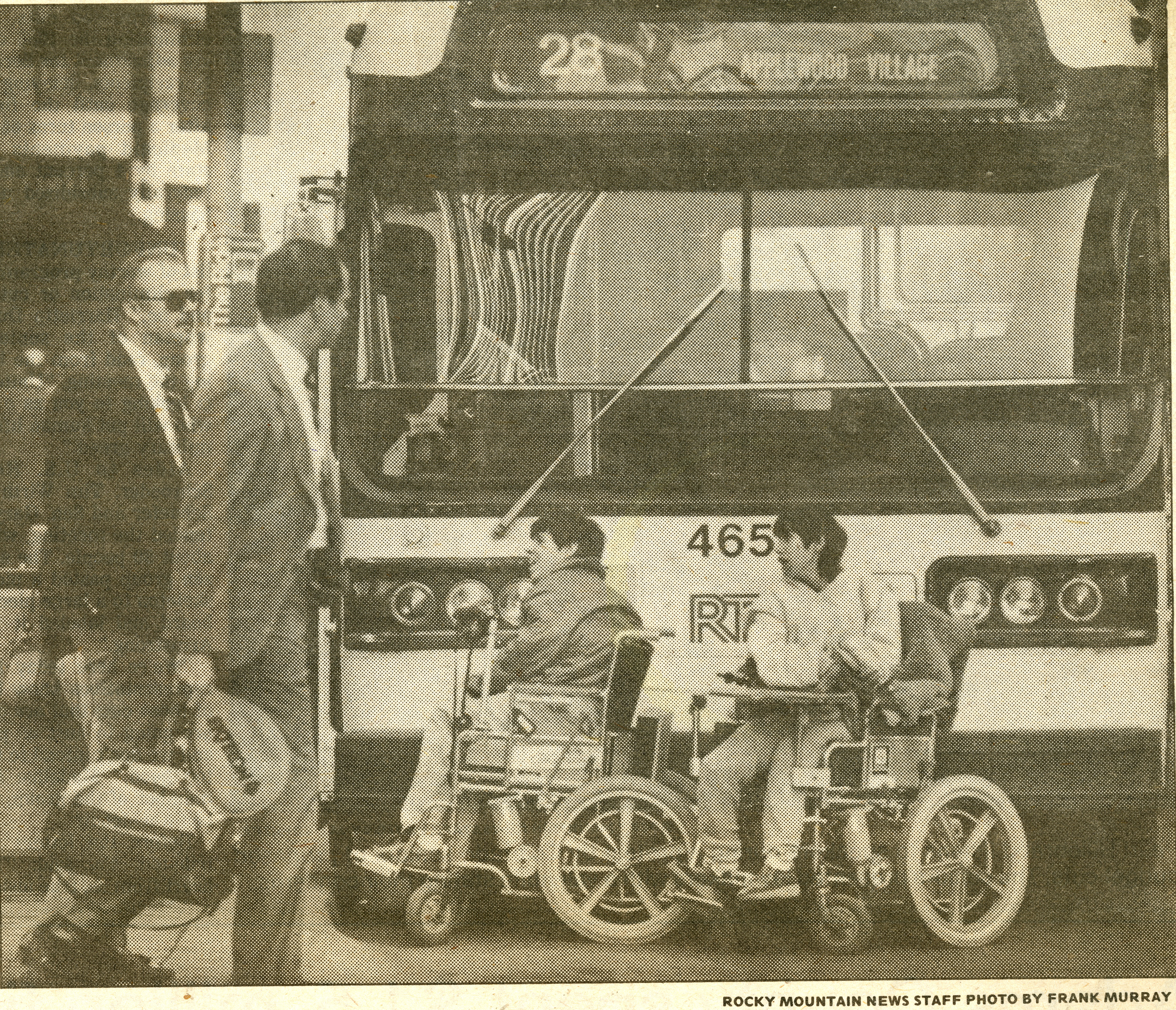
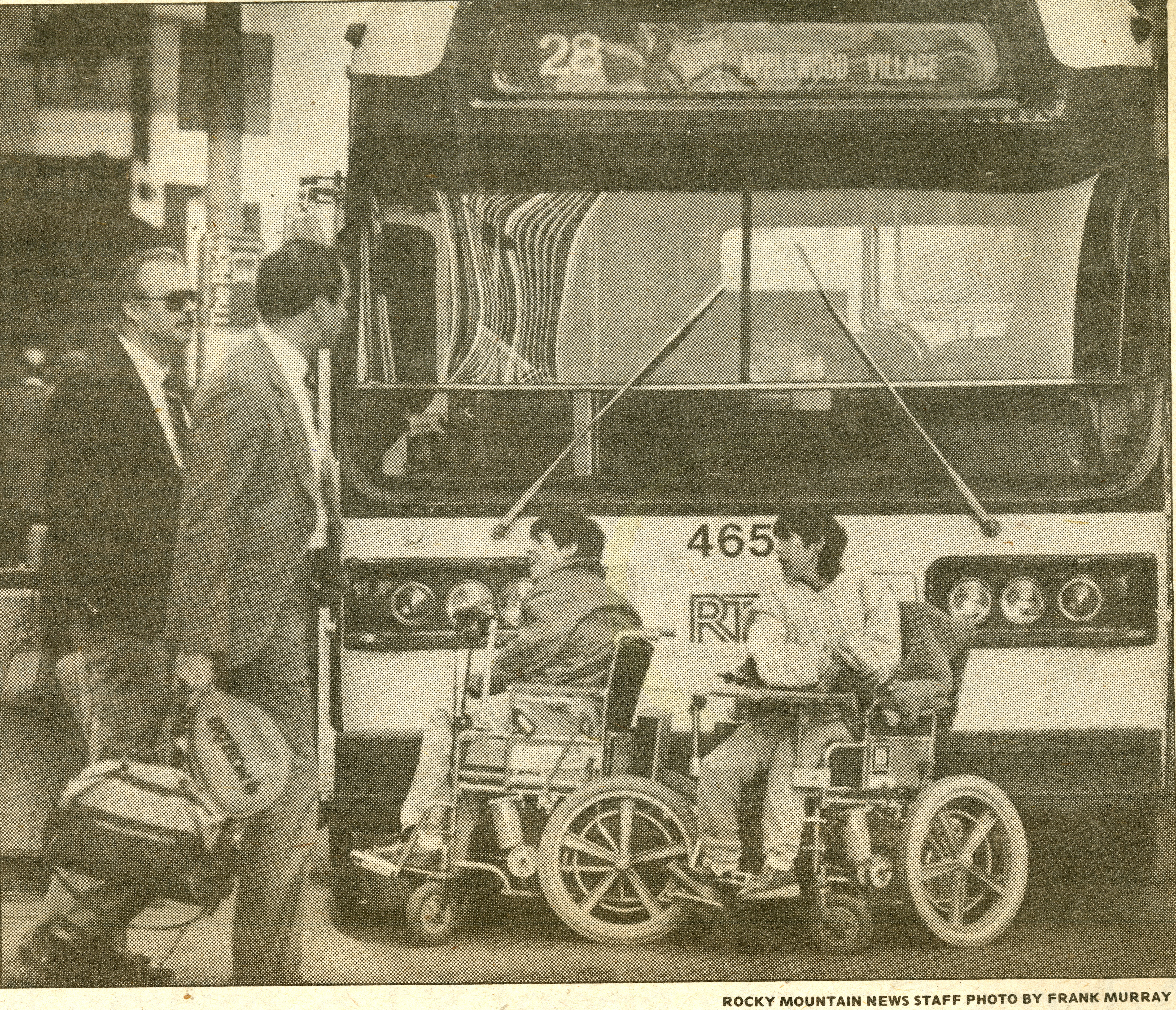
Two men in wheelchairs block the path of an RTD bus. (Denver Public Library)
Tensions came to a head when ADAPT picketed an APTA conference in 1987, forcing APTA members to climb over rows of wheelchairs. While agencies prior to the ADA had some legal commitments to run dial-a-ride services for the elderly and disabled, these were often inconvenient and expensive. In cities - like San Diego - that dared to adopt lifts on high-floor buses, costs were steep. In 1986, San Diego Transit general manager Roger Snoble cited the cost per ride at $166. APTA sued the federal government over a previous Section 504 mitigation that would have required lifts on buses, claiming it was not financially feasible, and won.
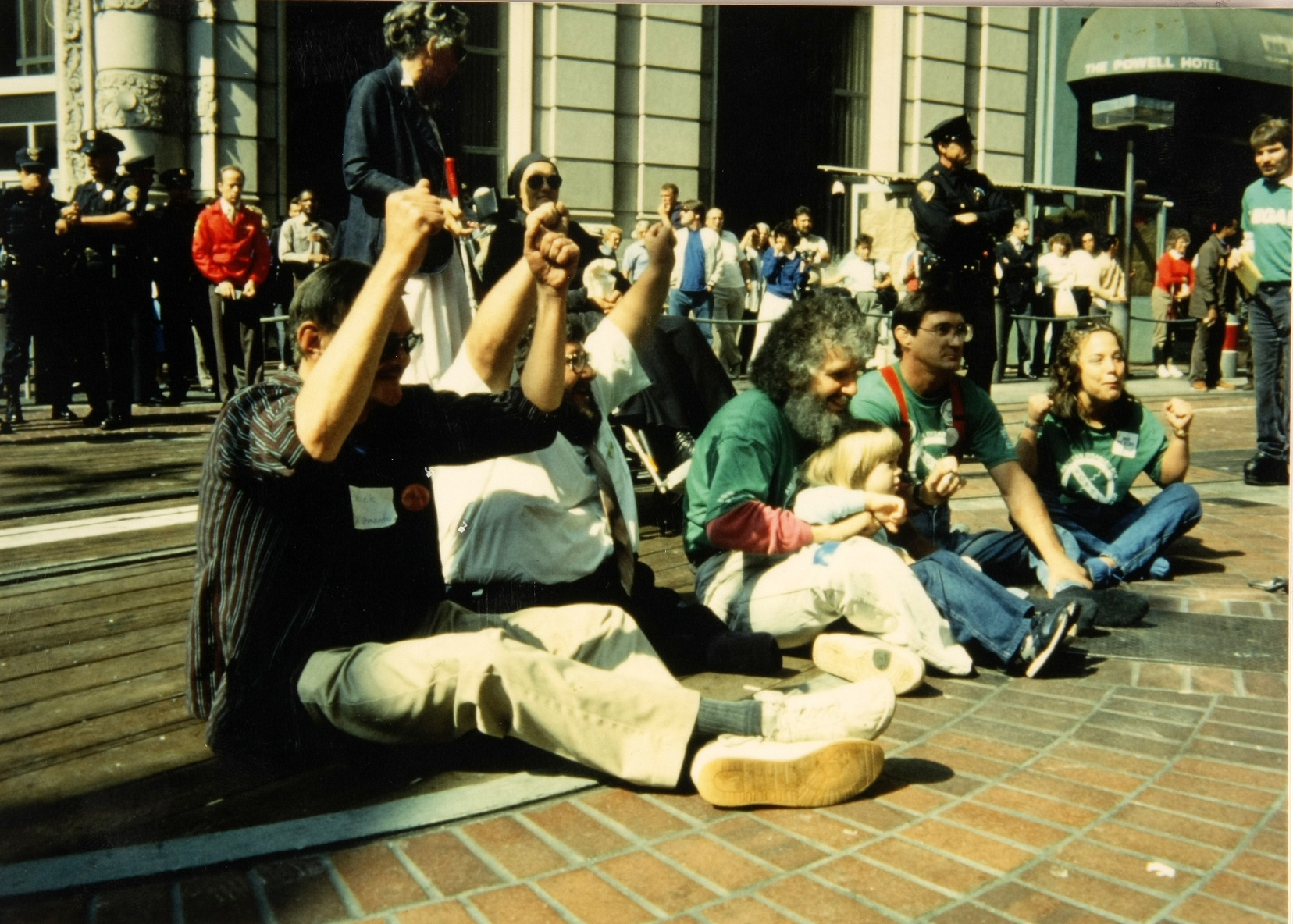
ADAPT protesters block the turnaround of a San Francisco cable car. (ADAPT photo)
It wasn't until 1986 that the National Council on Disability - which had been formed by an act of Congress in 1978 - built off the work of groups like ADAPT and recommended the enactment of a sweeping national anti-discrimination law: an Americans with Disabilities Act. On July 26, 1990 - 35 years ago today - President George H.W. Bush would sign this legislation into law, formally prohibiting discrimination based on disability in the United States. Even more radical than this prospect was the ADA's requirement for accessibility in public spaces, including on public transit. The United States Code was quickly amended to ensure transit vehicles were accessible, mandating audible and visual announcements at major bus stops and transfer points, safe lifts for high-floor vehicles, priority seating areas near most doors, and set standards for new rail cars. Paratransit services gained a much wider mandate, and work began on making the nation's legacy rail systems accessible.
This isn't to say, of course, that the story of the disability rights movement is over, or that accessibility in transit is perfect today. Many of the nation's legacy rail systems, for example, have been slow to add elevators to stations and transit centers. In New York City, hundreds of Subway stations have yet to be made accessible. While Chicago has made great strides with the ASAP (All Stations Accessible Program) and RPM (Red-Purple Line Modernization) projects, some stations - and thus communities - are waiting decades for upgrades. Although the majority of Boston's subway network is accessible, large swaths of the western Green Line light rail network isn't. On Philadelphia's SEPTA Metro network, all of the stations on the G and almost all of the stations on the L are accessible, but many stations on the B and M, as well as the entire D and T, aren't.
And yet, we keep moving forward. It's hard to overstate how transformative the ADA has been, and how it's set a true global precedent. While many of our oldest rail systems are still catching up, every public bus in the nation is accessible via ramp or lift - a massive feat by any measure that unlocks independence for millions of Americans. Many disabled people are uniquely reliant on public transit, and we are lucky to live in a nation that recognizes this in its regulation. Now, we must keep fighting to streamline projects like ASAP and SEPTA's Trolley Modernization in order to deliver a transit future that's fast, safe, and efficient for all.
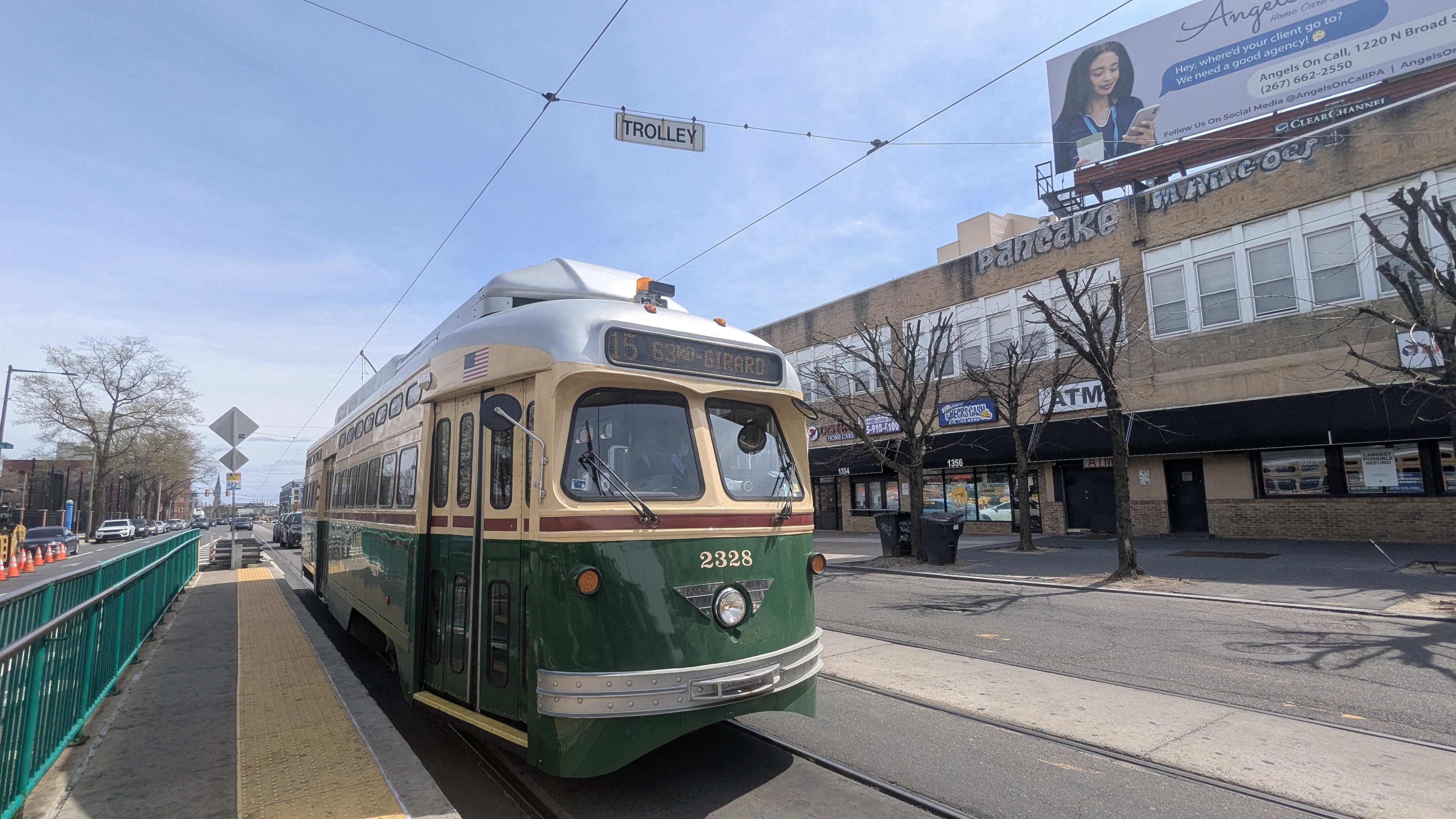
A restored and newly-accessible PCC car running on SEPTA's G1 train. (Samuel Sharp / BuildSD)