
Who rides the school bus?
 07.22.25 // The life and times of a small piece of Americana.
 Samuel Sharp, Platform & Journal Lead
It's just before 6:00 AM on a chilly April morning in Kearny Mesa, and Sean Redmond is gearing up to leave San Diego Unified's bus yard. Zonar device in hand, Redmond paces the aisle of the well-worn - but well-maintained - 2001 cutover bus he'll be driving today. He's checking for any safety issues that could imperil the dozens of young riders each bus serves every day. As I board the bus, he warns me to watch where I step–and where I touch. "This is a virus-mobile," he quips. "It was a virus-mobile before COVID, I do my best to keep it clean."
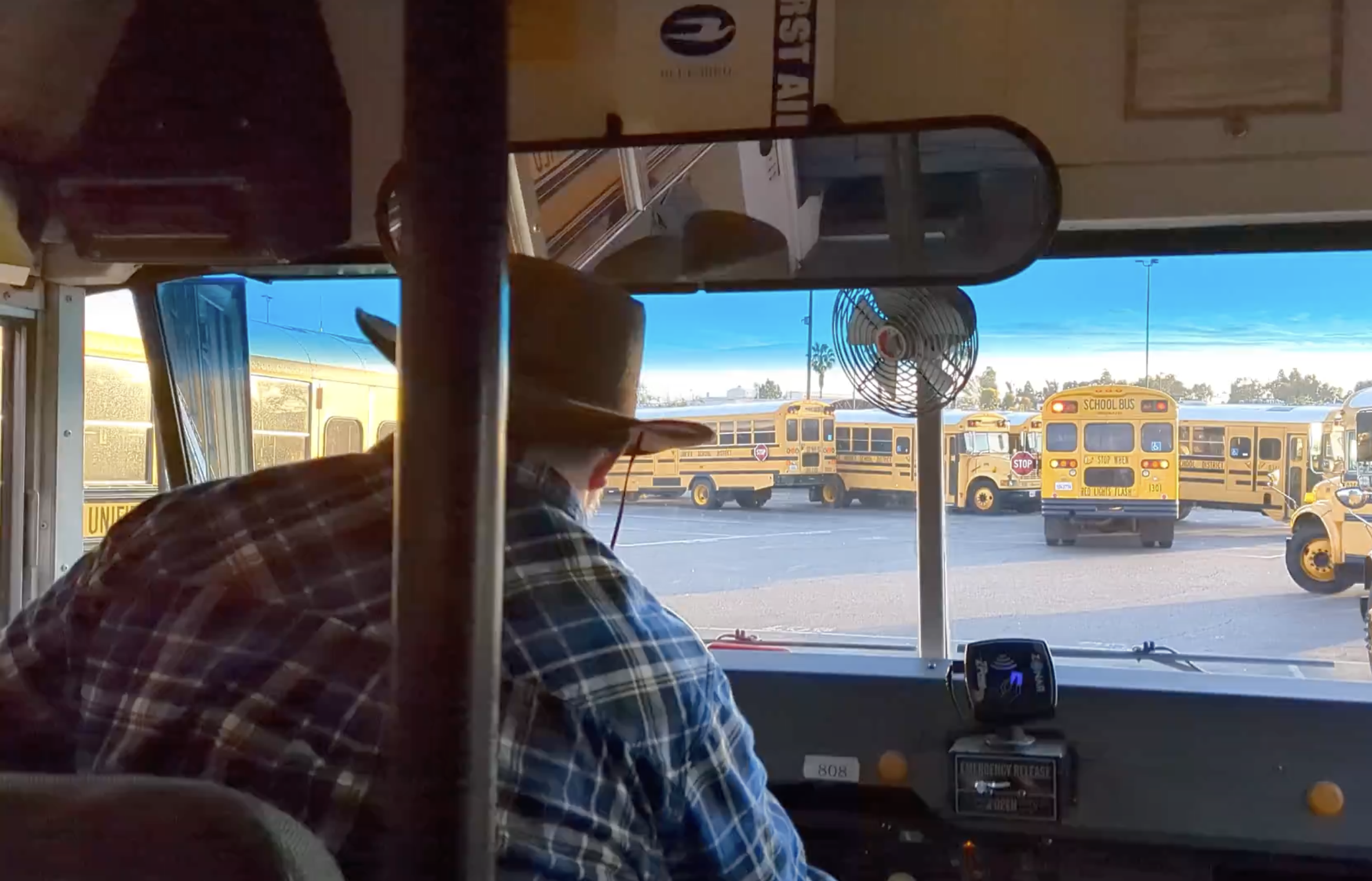
Driver Sean Redmond prepares to roll out a bus. (Samuel Sharp / BuildSD)
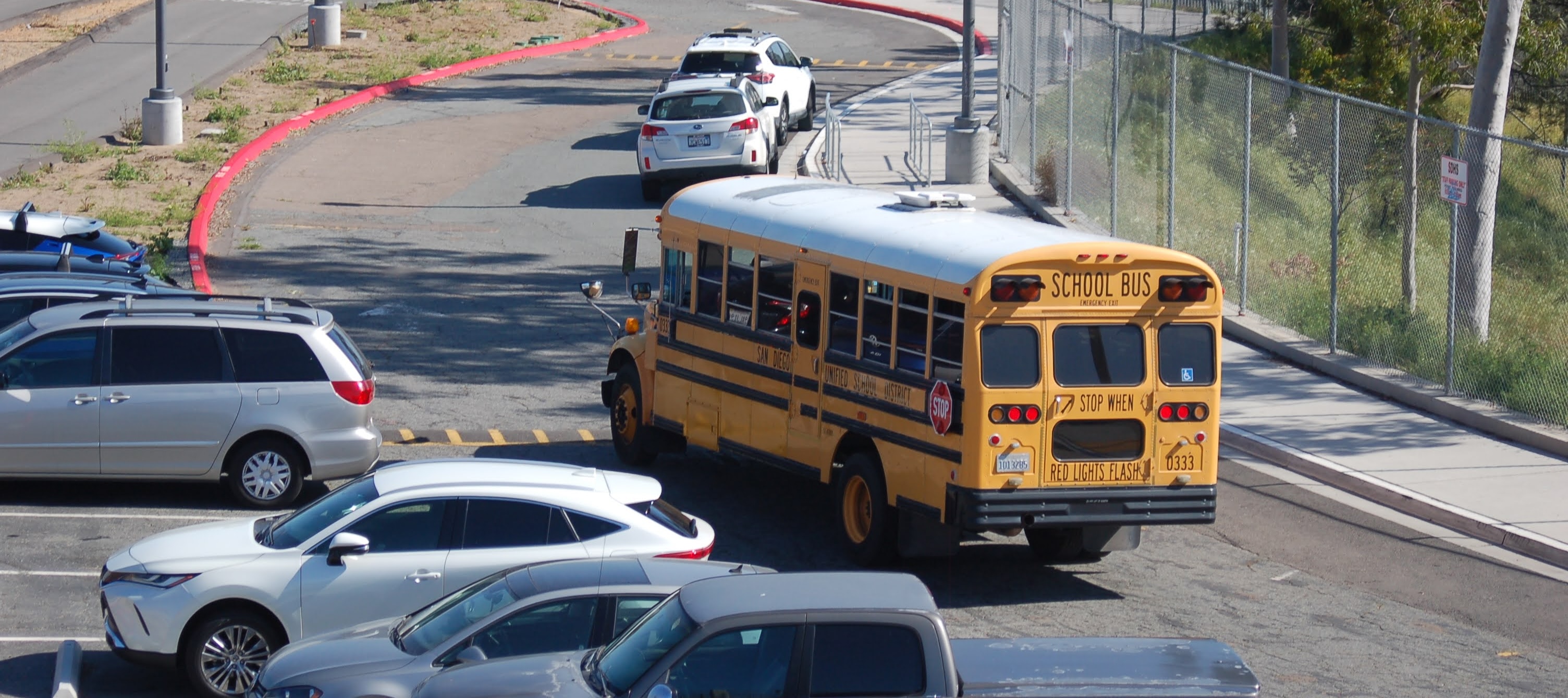
But if you attended a San Diego Unified school in the past several years, chances are you've never ridden one of these iconic bright yellow buses for more than a field trip or a sports game. So who are they really carrying every day? "We transport approximately 5,500 students every single day," says Marceline Sciuto, an operations support officer with the district. "Our grand total for children with disabilities is about 75 percent... the other 25 percent of those 5,500 children are those who participate in our integration programs, our VEEP [Voluntary Enrollment Exchange Program], and our magnet students, students who enroll in our magnet-focused schools."
It turns out the roots of school buses in San Diego lie in the Civil Rights movement. "San Diego had really distinct pockets of ethnic groups living all around the city, and a group of parents were unhappy with that," accoridng to Sciuto. In 1967, twelve San Diego schoolchildren sued San Diego Unified's board in a case that would become known as Carlin v. Board of Education. Ten years later, in 1977, a court ruled that 23 San Diego public schools were segregated and ordered that the Board of Education present a desegregation plan within three months. Until 1998, the District implemented voluntary busing and magnet schools under court supervision. When that supervision ended, however, the programs remained.
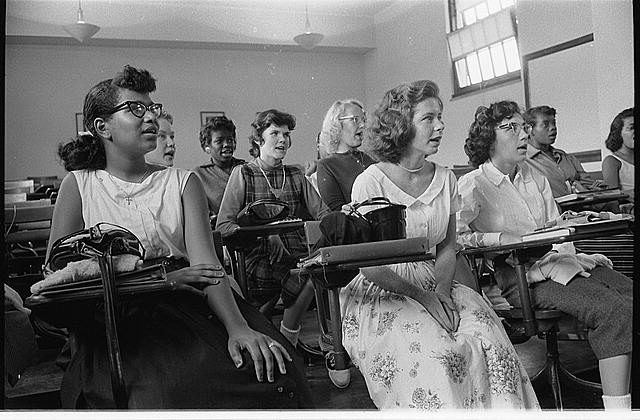
An early integrated classroom in Washington, D.C. (Library of Congress photo)
The largest integration busing program, VEEP, allows students who live within the geographic boundaries of select elementary schools to attend their designated VEEP middle or high school instead of their neighborhood school. For example, a high school student living in the Chavez Elementary enrollment area could opt to attend a school as far away as Clairemont or University City.
Back with Redmond, the bus is fired up and ready to go. Today, it's shuttling special needs students in the Canyon Hills / Mat Kwatup KunKun cluster to their neighborhood schools. You might, then, assume that the only students travelling long distances via school bus are those participating in VEEP or who have enrolled in a popular choice/magnet program. However, many special needs students also rely on transportation beyond their own neighborhoods. "Because we have such a large district, and the resources are throughout the district...sometimes the families of special needs kids who need special resources aren't near those," Redmond explains. "The bus actually goes into those marginalized communities and we're able to safely transport the students to the school."
For Redmond, safe transportation has been a lifelong passion and a lifelong mission. "I've also worked in motorcoaching, I used to drive for a motorcoach company out of Las Vegas. I drove for the cruise ship companies up in Alaska, I've driven for trucking companies in Alaska and Canada, I was always to go-to guy in the Air Force...I started out driving school buses in North Dakota, then I drove school buses for Department of Defense education in the Phillipines." When he got an offer to drive in San Diego, however, Redmond was ecstatic. "I started off with transits [larger school buses used for field trips and sports], and I just didn't care for it too much, and I had a very good safety and training supervisor here who said, 'why don't we try you with special education kids?' And, that was seven years ago, and I only get in [transits] every five years to re-certify."
"I really like working with behaviorally challenged students," he explains. "I don't know if that's just the ex-cop in me, but I don't have to get physical with students, that's just my specialty." And many students–bus riders or otherwise–appreciate the work drivers like Redmond do every day. "I think taking the school bus is way more faster [sic] cause' it drops kids off but also it's a time to just rest up or connect with other kids like yourself," according to Andrew P., a school bus rider at San Diego High School. So next time you see the wheels going 'round and 'round on one of San Diego's bright yellow school buses, take a second to think about all the students and stories riding inside.
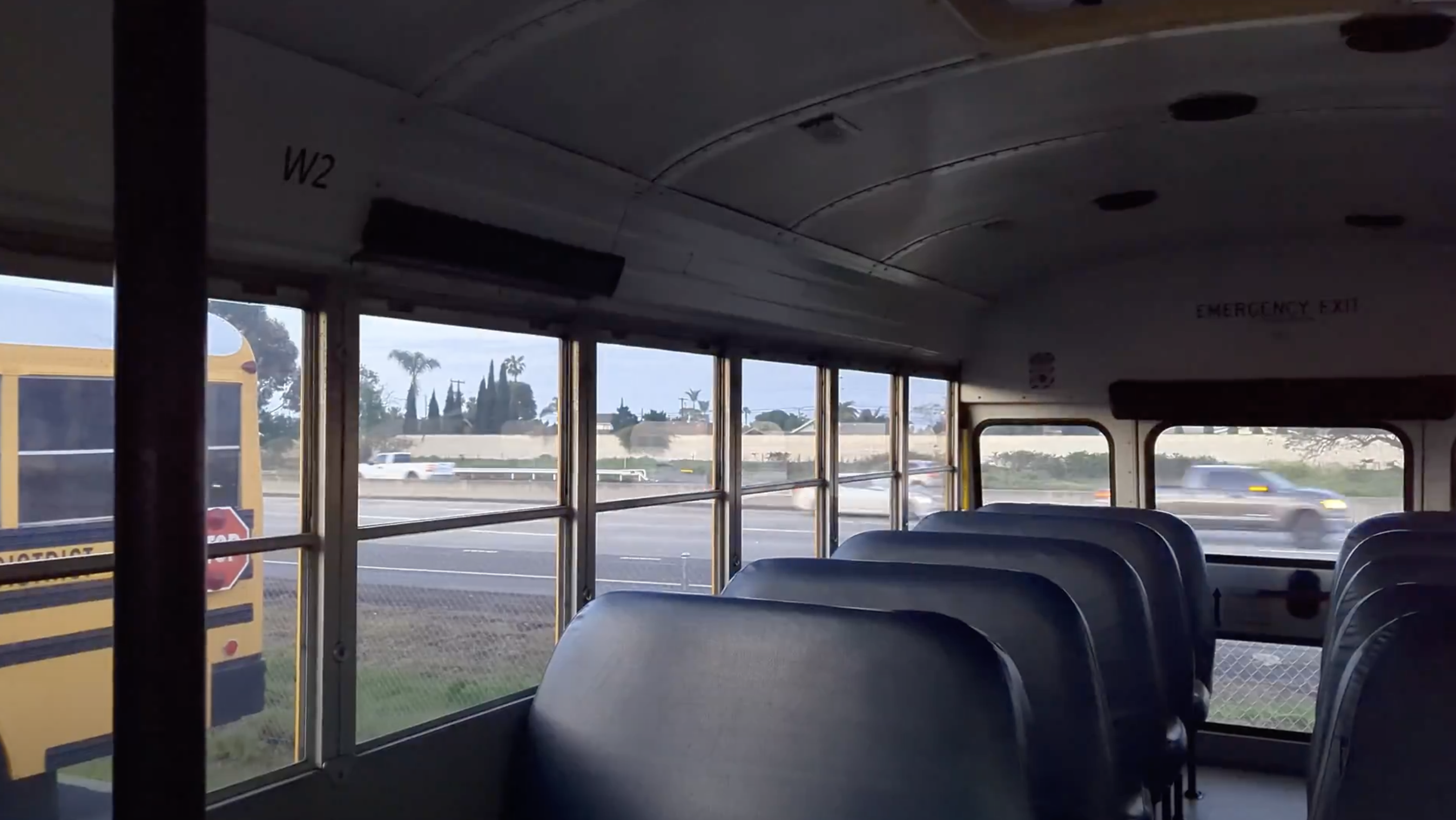
A bus sits idle in San Diego Unified's Kearny Mesa yard. (Samuel Sharp / BuildSD)
This story is adapted from a piece I produced for San Diego High School's Caver News Network.