Which stations count and why?
 How did we figure out which stations are eligible for upzoning?
 Maxwell Gergen, Writer & Advocacy Lead
 Samuel Sharp, Platform & Journal Lead
 Mitchell L., Projects Editor
 Ethan Paul, Multimedia & GIS Lead
Senate Bill 79 (SB 79) is a California state housing law that mandates upzoning around high-quality public transit stops. This bill, now law, received 13 revisions leading to significant confusion among the public as to what transit stops would or wouldn't be subject to SB 79. But now that the dust has settled, important questions still remain in regards to what SB 79 says and does, and what it doesn't.
Within SB 79 there are two tiers of transit stops that qualify for upzoning. These tiers, Tier 1 and Tier 2, separate the highest capacity transit stops from higher capacity transit stops. The areas within half a mile of these transit stops will receive varying degrees of upzoning. The highest capacity transit stops will allow for higher levels of density in their surrounding areas compared to transit stops with still qualifying, but lower frequencies and capacities.
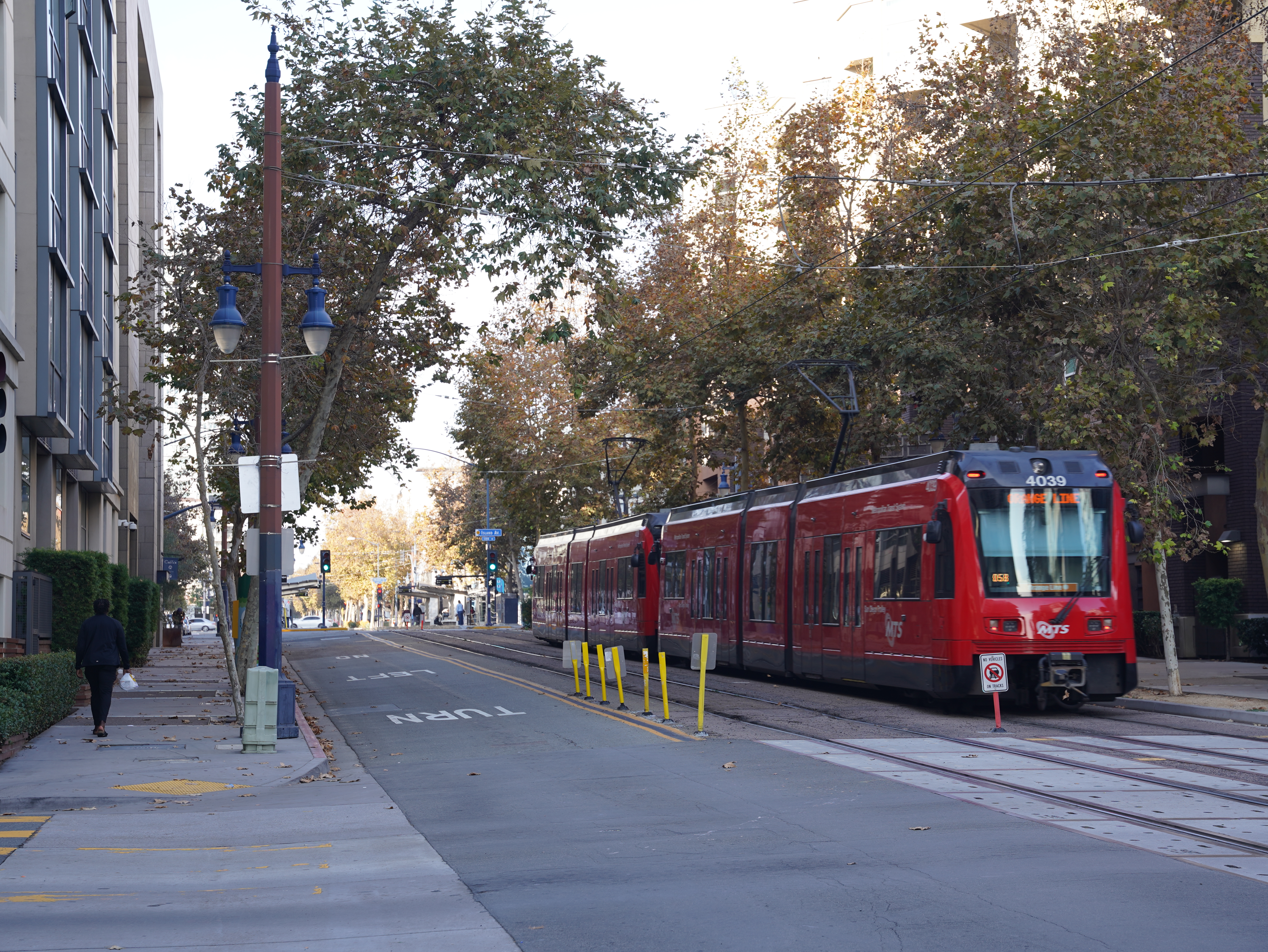
An Orange Line Trolley approaches downtown San Diego's Park & Market station. (Maxwell G. / BuildSD)
Tier 1 applies to heavy rail metros and subways, the only two in the state being BART in the Bay Area and the LA Metro B and D lines. Tier 1 also applies to “very high frequency commuter rail” services. As defined in SB 79, Tier 1 applies to Metrolink, Caltrain, COASTER, Altamont Corridor Express (ACE Train), and Amtrak’s Pacific Surfliner, Gold Runner, and Capitol Corridor. To reach this tier, stations must meet a service frequency requirement of 72 daily trains. Currently, no station within San Diego County meets either of these requirements. In the Bay Area, many Caltrain stations, such as Redwood City and San Mateo, do. The only Metrolink station this applies to is L.A. Union Station, which is also served by the Metro B and D lines. Tier 1 does not apply to interstate Amtrak routes or future California High Speed Rail stations.
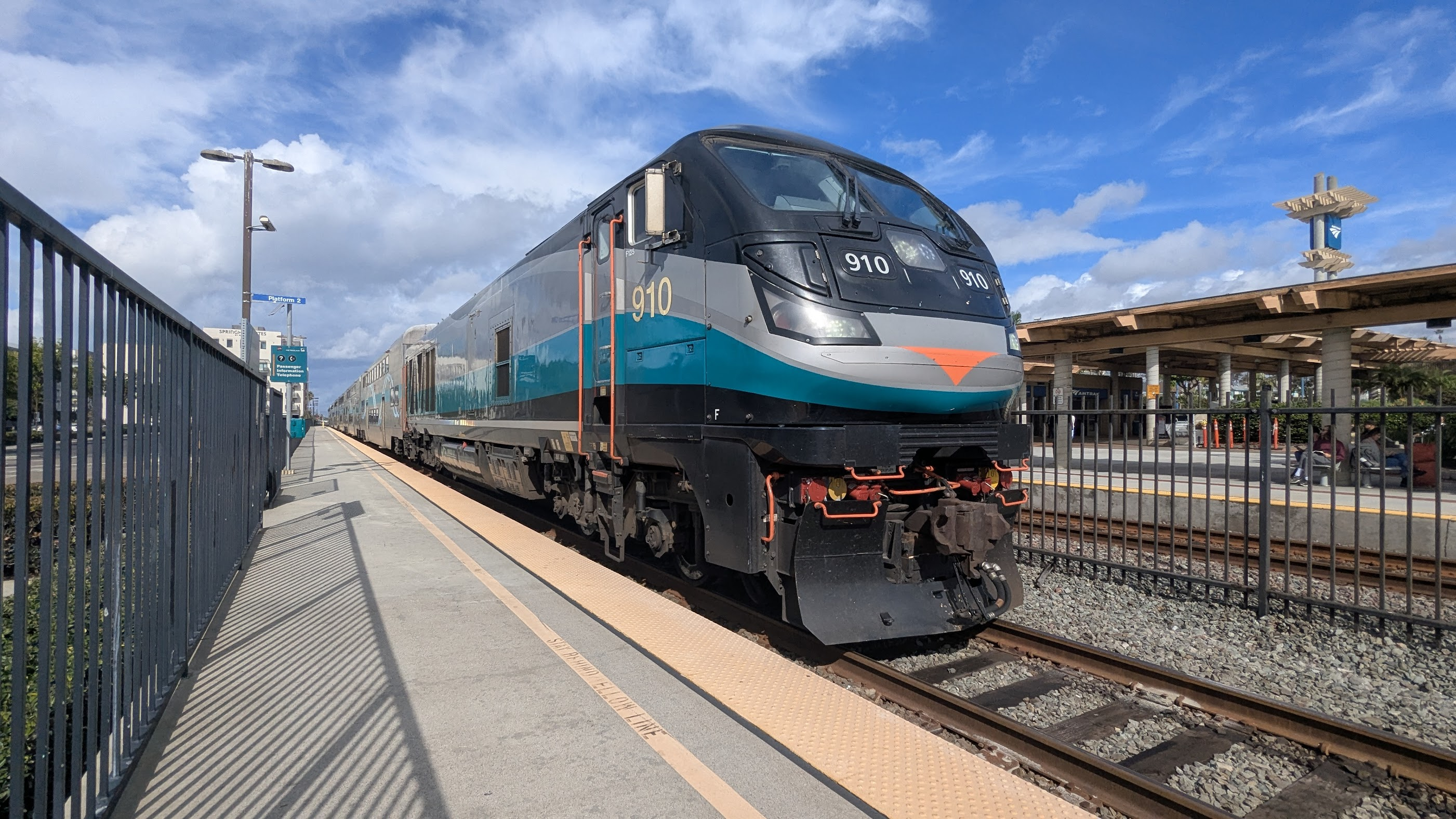
A Metrolink Orange County Line train waits to enter service at Oceanside. (Samuel Sharp / BuildSD)
Tier 2 applies to high quality rapid transit stops that do not meet the frequency or capacity requirements for Tier 1, but still provide high frequency and capacity service. The law first makes reference to stations served by “high frequency commuter rail” - a minimum of 48 daily trains. This applies to most Caltrain stations, along with some Metrolink and COASTER stations. In the San Diego region, any station served by both the COASTER and Amtrak’s Pacific Surfliner will satisfy Tier 2 requirements, those stations being Oceanside, Solana Beach, Old Town, and the Santa Fe Depot.
Additionally, Tier 2 applies to all light rail and streetcar stations. That includes every station on the San Diego Trolley, the SPRINTER, LA Metro’s A, C, E and K lines, Muni Metro in San Francisco, VTA light rail in San Jose, SacRT light rail in Sacramento, and the future OC Streetcar project in Santa Ana. Light rail stations make up the vast majority of eligible stops in San Diego.
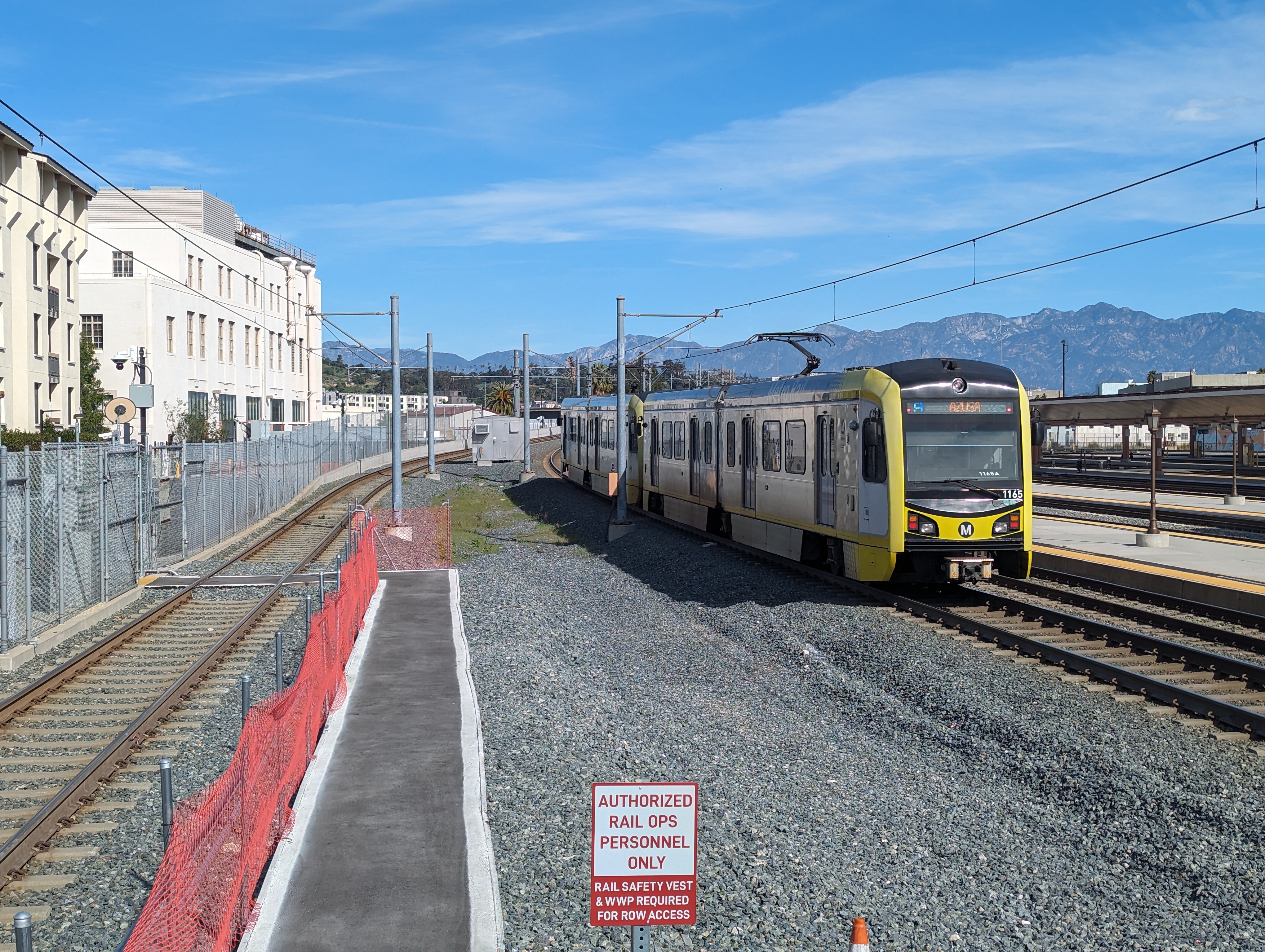
A Metro A Line train viewed from the platform at L.A. Union Station. (Samuel Sharp / BuildSD)
Some bus routes with higher frequencies and bus lanes contain transit stops which qualify as a Bus Rapid Transit (BRT) transit stop under SB 79. These transit stops are eligible for Tier 2. While the state of California has an official definition for BRT, the definition of BRT in this instance is not the same as the state’s official definition. To qualify for Tier 2, a bus stop must have a full time dedicated guideway or full-time dedicated bus lanes, with a service frequency of no greater than 15 minutes during weekday peak hours.
This lowers the bar from a full BRT system (like the LA Metro G Line) to include higher quality bus services found throughout many Californian cities. In San Diego specifically, a total of five bus routes meet these criteria running on four major corridors: routes 1, 7, 10, Rapid 215, and Rapid 235. These routes run primarily in Uptown and Mid-City on Park Boulevard, El Cajon Boulevard, University Avenue, and SR-15’s CenterLine busway through City Heights.
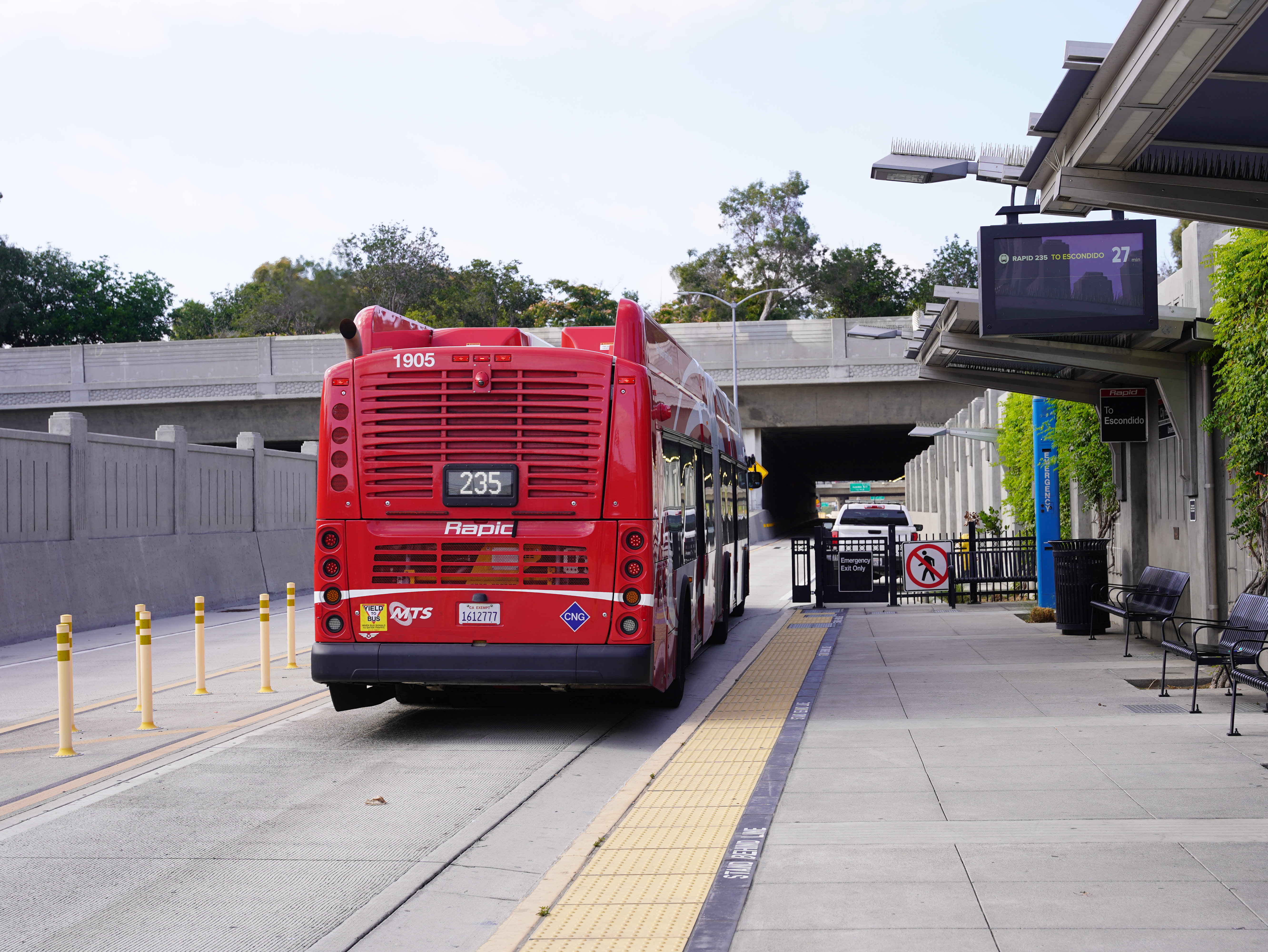
Platform view of the City Heights Transit Plaza. (Maxwell G. / BuildSD)
With 78 rail stations and 52 bus stops that are SB79-eligible across San Diego County, to say there’s a lot of upzoning coming soon to San Diego as a result of this now-passed bill would be an understatement. To see a map of the upzoning surrounding 63 of the 78 San Diego-area rail stations, plus all 52 bus stops, visit our Mapping & Eligible Stops page.
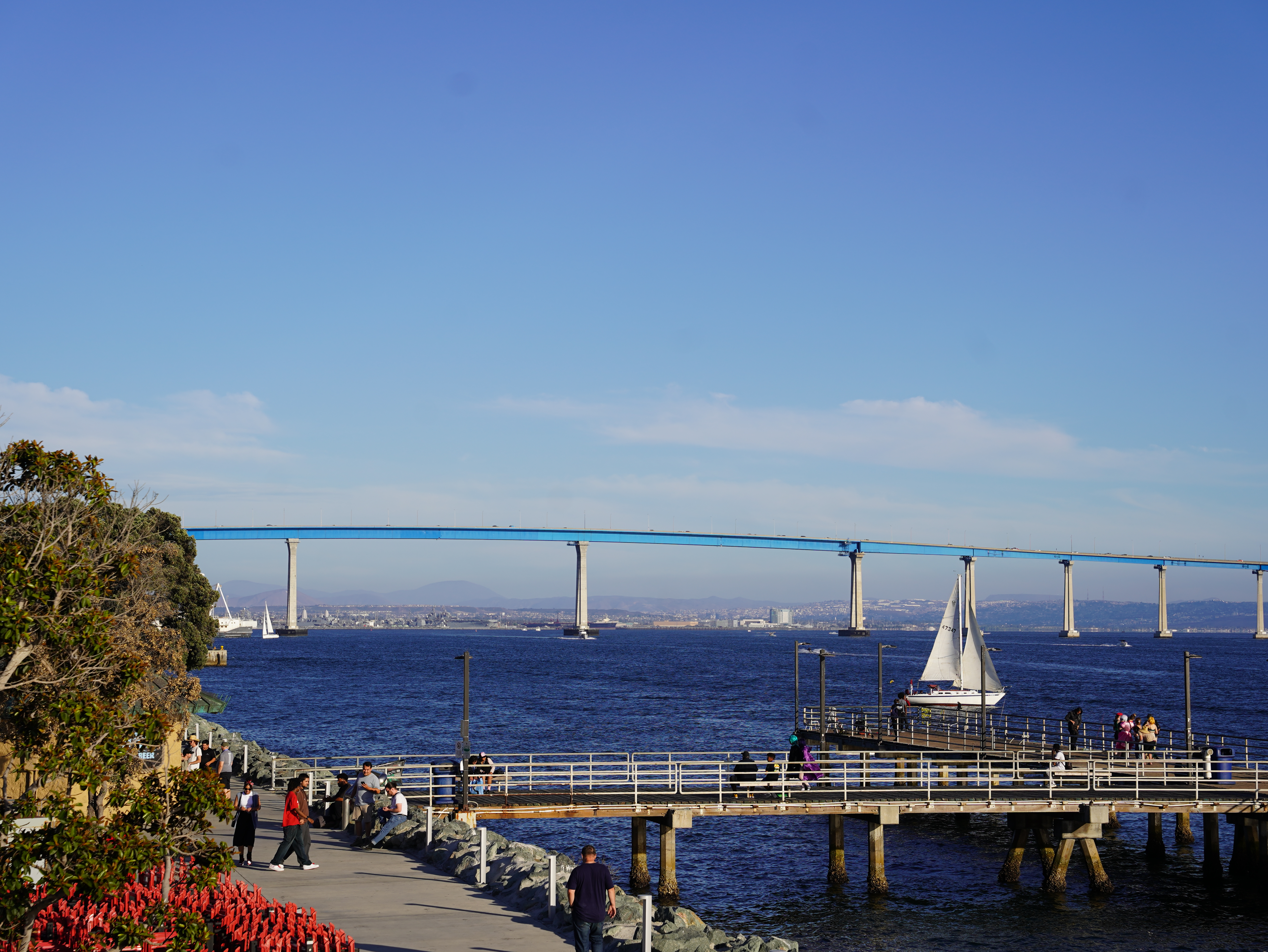
View of the San Diego-Coronado Bay Bridge. (Maxwell G. / BuildSD)
Sources:
SB 79 Text
California Code (PRC)
RideSD Bus Lanes Project
RideSD Bus Lane Report