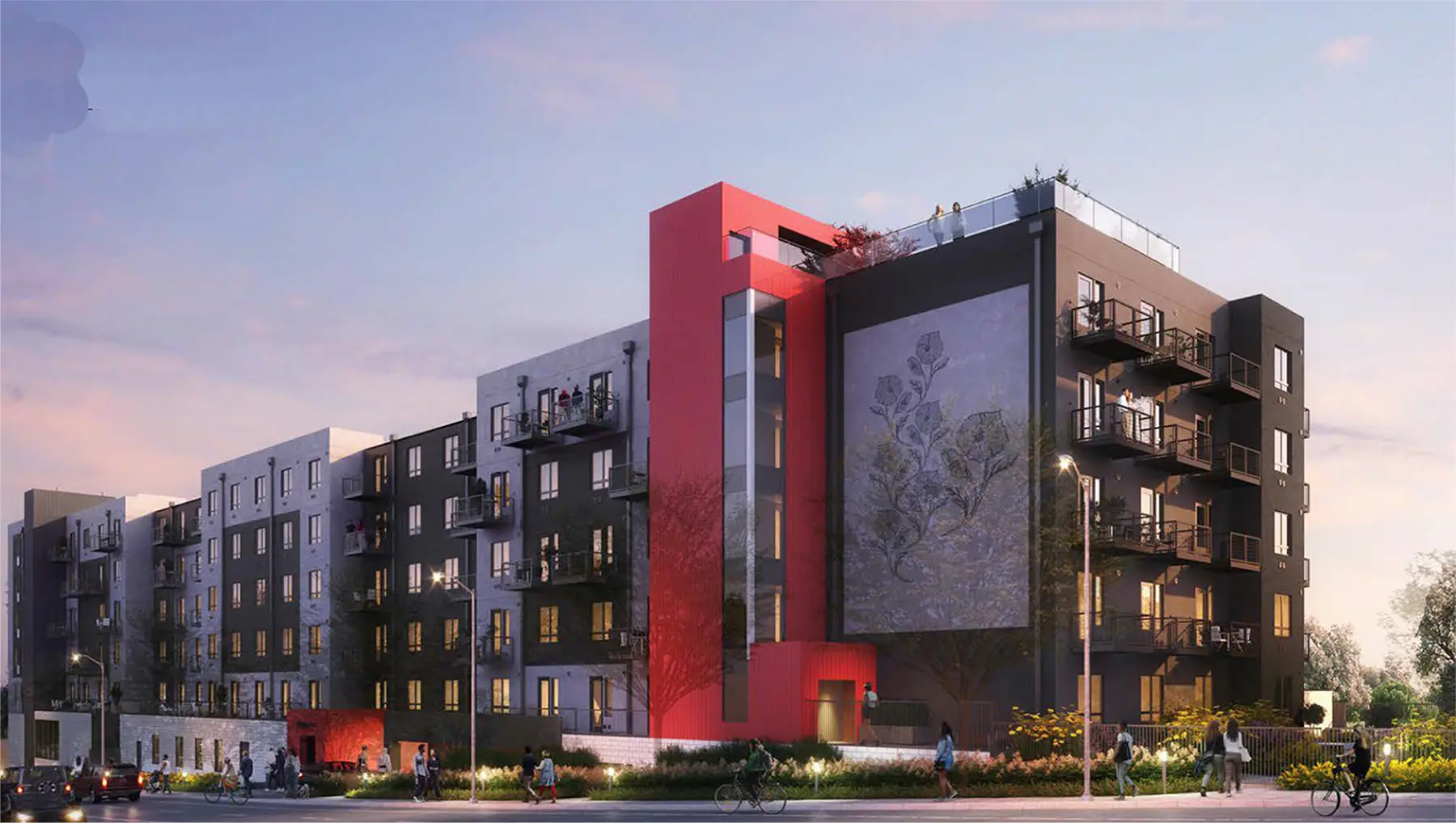
3275 Market Street
 08.18.26 // Stockton // Modular apartments are coming together on Market Street


 Maxwell Gergen, Writer & Advocacy Lead
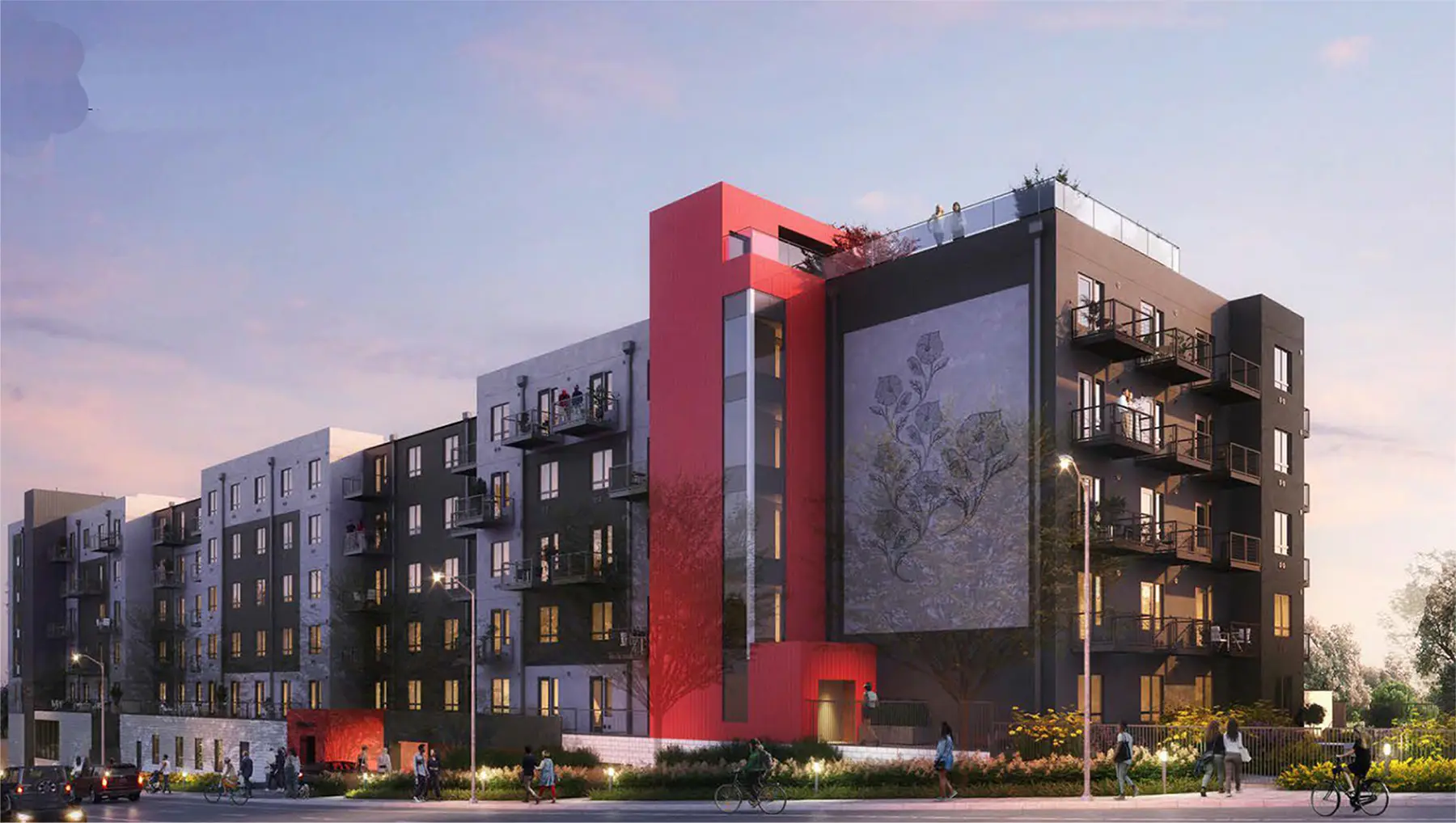 Image from Impact Housing
A 272-unit modular development in the Stockton neighborhood of Southeast San Diego is currently in permitting. Currently on the site are 3 light industrial buildings built in the 1990s, home to an autoshop, metal work shop, and HVAC business, built at a time the neighborhood was not zoned for housing. The developer is Impact Housing, a Southern California-based design-builder specializing in modular construction.
Stockton mostly consists of older single family homes and small multifamily properties, as well as light industrial and commercial buildings built in the 1980s and 90s. 3275 Market Street would be the first major development in the area since 2023’s 3167 Market Street also by Impact Housing.
3275 Market Street, due to being 100% affordable, was eligible for the Affordable Housing Permit Now Program. Signed in 2023 as an executive order by San Diego Mayor Todd Gloria, this program allowed 100% affordable developments, supportive housing, or homeless shelters to have a streamlined 30 day time limit on the permitting process, drastically shortening the wait time of a process that could take multiple months. This applies to building permits, engineering permits, as well any ministerial permits such as grading. 3275 Market Street used it for its build permit, easement vacation of an alley behind the property, and retaining walls.
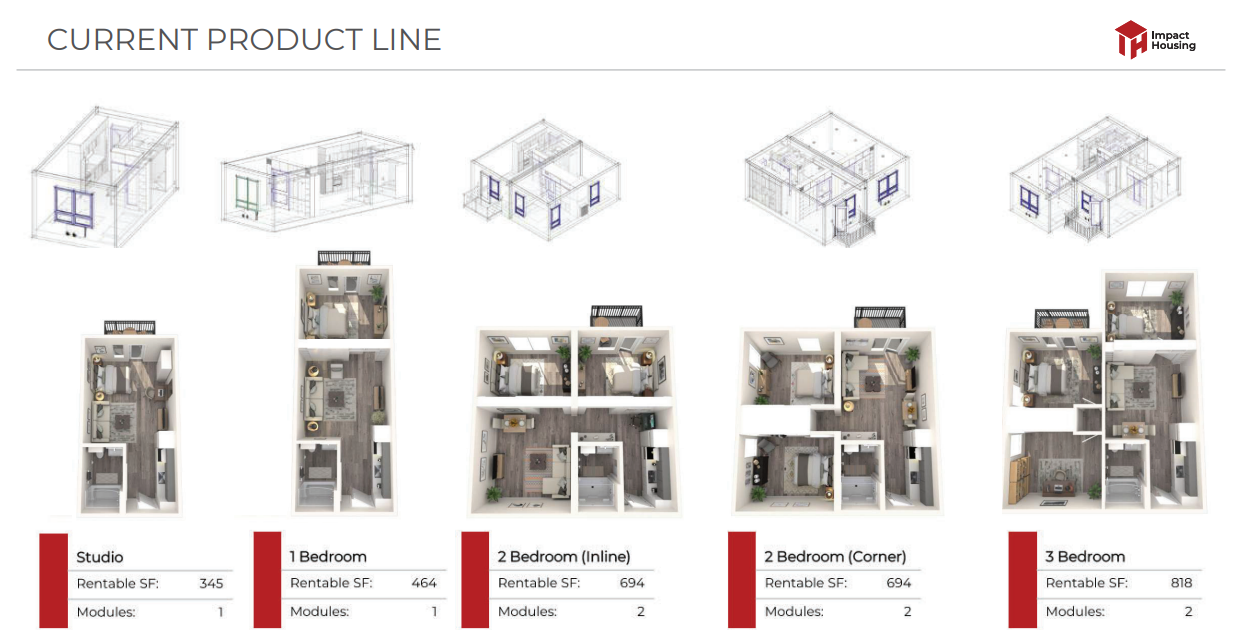 Image from Impact Housing, from a presentation to SCAG
The development's unit makeup is divided into 74 studios, 160 one-bedrooms, 23 two-bedrooms and 13 three-bedrooms. This favoring of smaller floorplans is likely due to the combination of modular construction with the narrowness of the lot, making the depth required for a two or three-bedroom unit difficult to achieve. The studio units sit between 30% and 60% AMI deed restricted affordability, while the one, two, and three-bedroom units sit between 50% and 70% AMI.
Modular development uses pre-built housing modules assembled off site. This speeds up construction and allows for standardization of units and overall less labor, with that labor being more specialized in a factory environment. Impact Housing assembles their modules in Yorba Linda, where they are then shipped by truck to the jobsite and installed by crane, before being pieced together akin to stacking shipping containers on site. Typically they are above a concrete podium. Impact Housing's modules are type V construction, so they abide by the same construction regulations of a type V over type I development.
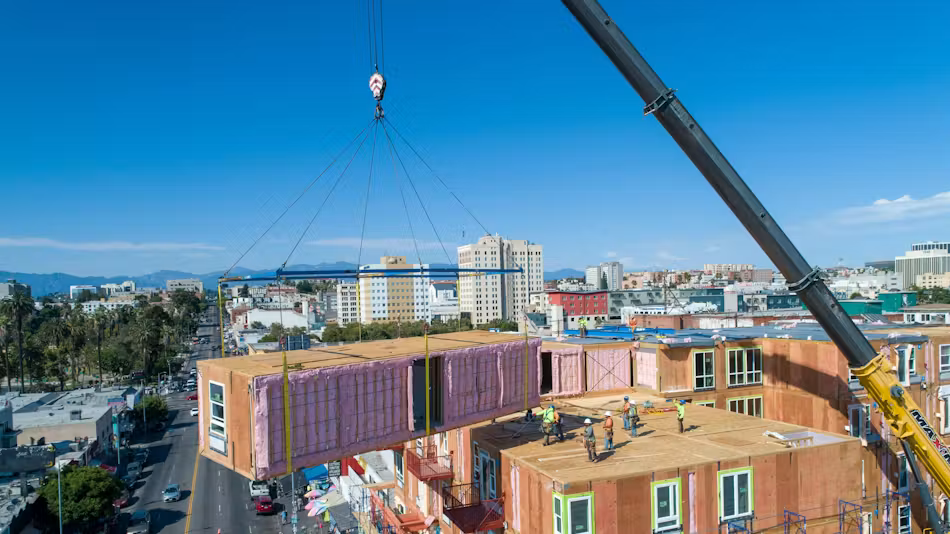 Image from Impact Housing
According to Impact Housing, the use of modular construction allows for a 20-35% time saving, a cost saving of 25-30%, and a 50% reduction in the amount of labor necessary for the modular portion of the development. With a track record from Impact Housing and others of quick build times during the modular phase, the cost savings are more than likely true.
 Image from Impact Housing
Architecturally, 3275 Market Street is defined by its linear lot, being approximately 500 feet long by only 70-90 feet wide. To break up the design, it is split into two buildings, the larger one being the majority of the lot and reaching up to 7 stories, with the smaller building being less than a quarter of the property, 5 stories, on the lot's narrower portion.
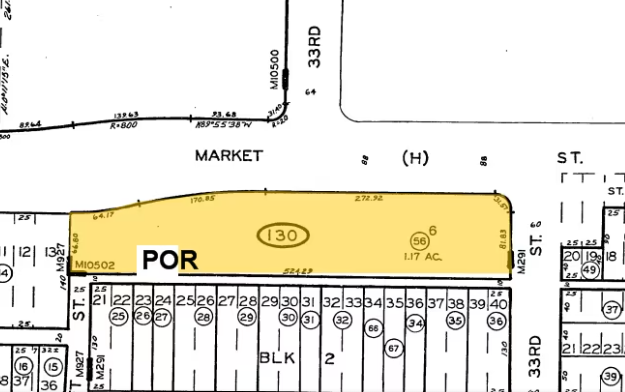 Image from Loopnet
There are two levels of parking inside the podium of the building, utilizing the slope of the site to access each level more efficiently. The second story is where the majority of building amenities are located, and there will also be a partial rooftop terrace in the main building. It is unknown if there will be ground floor retail space.
The finances of the development reveal both how it was funded as well as its cost savings. Organized by MRK Partners, 3275 Market Street was able to receive some benefits from the California Debt Limit and Tax Credit Allocation Committee, while also receiving a tax exempt bond of $45 million from Citi Community Capital, and an annual tax credit of $4,393,099. This was granted due to the finances of the project as well as the 100% affordability. Total construction costs are expected to be just over 90 million dollars: with a per unit cost of $332,092, it is well lower than the average for affordable housing.
 Image from Impact Housing