Georgia Modern Apartments
 02.20.2026 // North Park // Modest Infill Development in North Park

 Nehemiah Buenaventura, Business Manager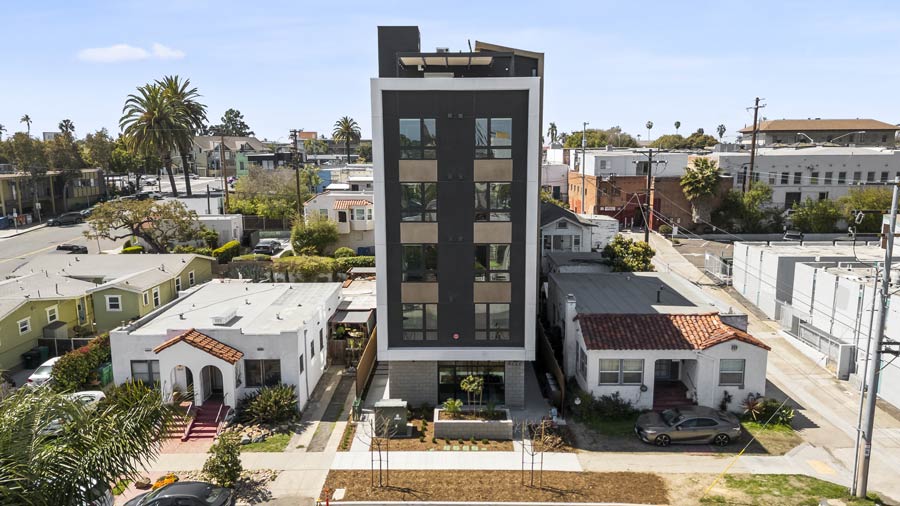
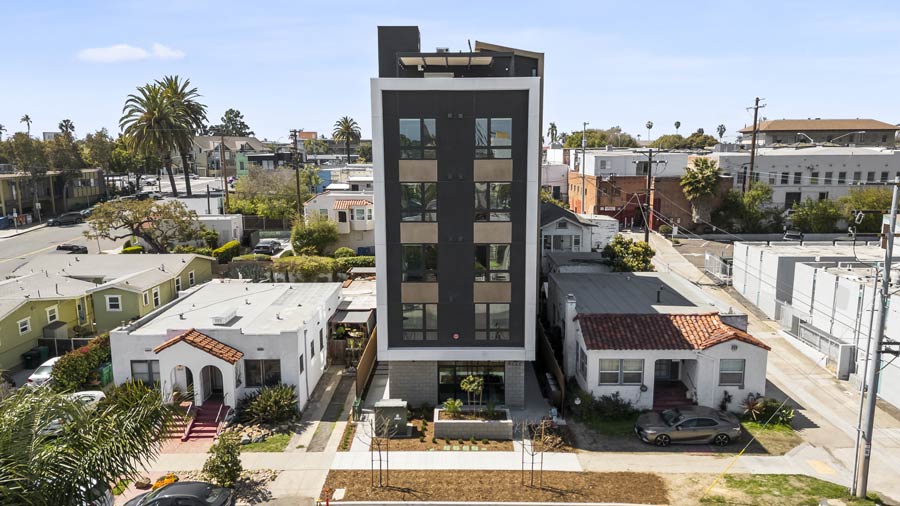
At 4222 Georgia Street, a narrow infill lot in the heart of North Park has been transformed into a six-story residential building that reflects the neighborhood’s ongoing shift toward denser, urban living. Named Georgia Modern Apartments, in 2025 the development opened for business with 31 new apartments on a street long defined by small-scale low-rise structures.
Before redevelopment, the site at 4222 Georgia Street was occupied by a low-rise residential structure, the type of modest building once common throughout North Park. Like many similar properties across the neighborhood, it represented an earlier era of development when land was abundant and density was low. Its replacement reflects today’s realities: rising housing demand, limited space, a city pushing upward rather than outward, and preserving and enhancing the walkable character of neighborhoods.
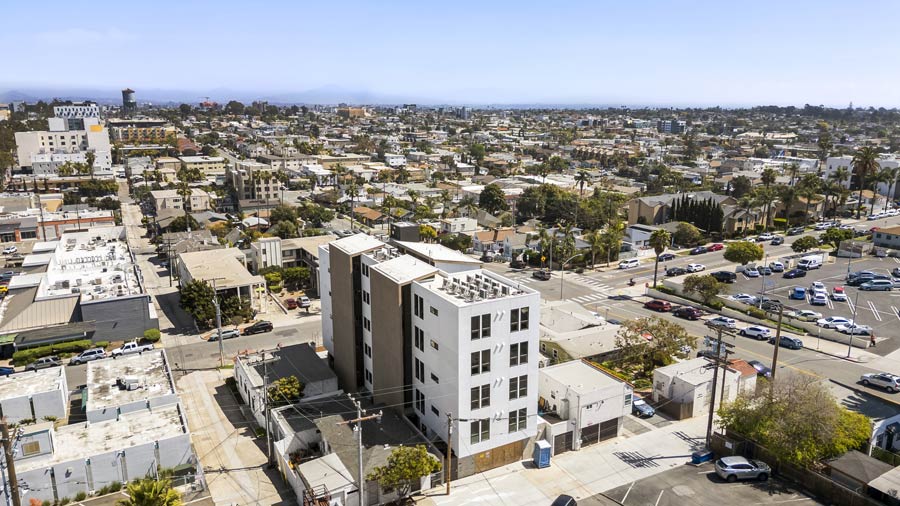
Designed by BV Architecture, a San Diego-based architecture firm, the building was designed as a vertical, efficient footprint. The building rises five levels of Type III-A wood-frame construction over a single Type I-A concrete base: a familiar formula across contemporary San Diego developments, allowing projects to maximize height while remaining cost-effective and structurally resilient.
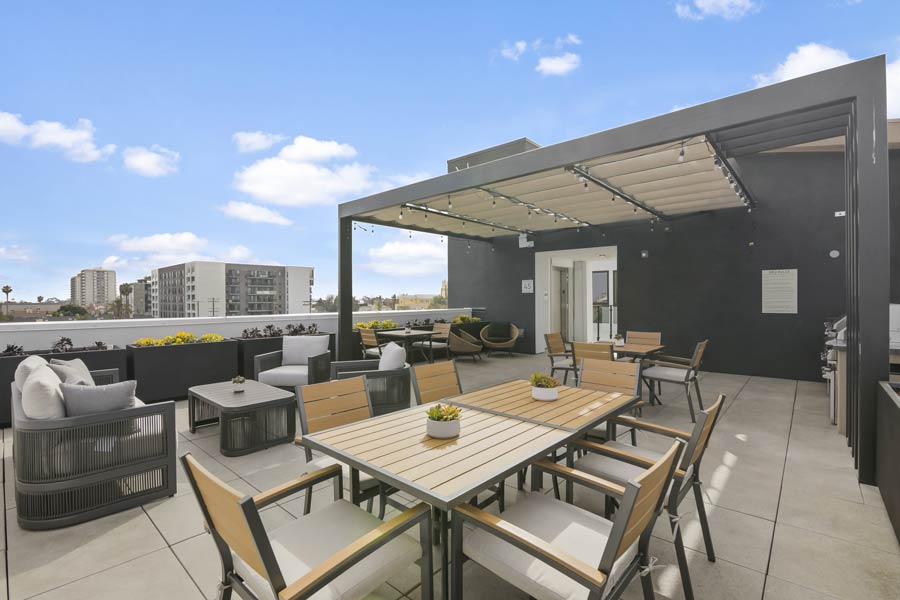
Even within its compact scale, the project prioritizes shared space. A communal area at ground level gives residents a place to gather, work, or relax, while a rooftop deck on the fifth floor opens views across North Park’s rooftops—a reminder of the neighborhood’s still-human scale despite increasing density. Parking is kept intentionally minimal, with only two spaces provided, signaling a lifestyle built around walkability, transit access, and proximity to North Park’s cafés, restaurants, and commercial corridors.
Georgia Modern is part of San Diego’s Complete Communities program, which allows increased housing density in exchange for on-site affordable units. Five of the building’s 31 apartments are designated as affordable housing—integrating below-market homes directly into a market-rate project rather than separating them elsewhere. Zoned RM-3-9 and located within a geologic hazard area, the project required careful engineering and permitting—another example of how modern urban infill balances growth with site constraints.
SOURCES: